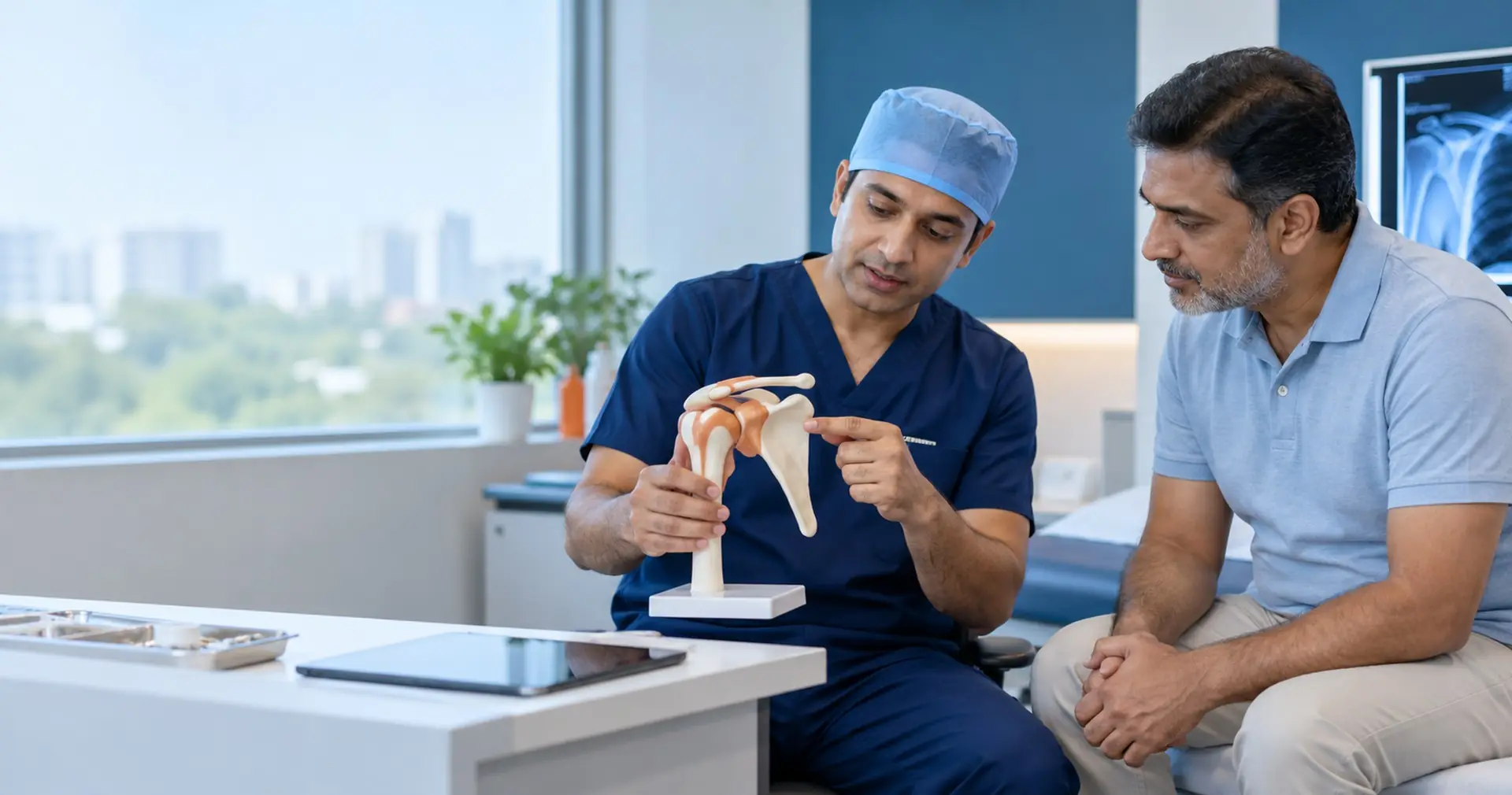
Rotator cuff repair: reattaching the tendon, restoring the lift.
In a rotator cuff repair, we reattach your torn shoulder tendon to the bone by keyhole surgery. We advise it for full-thickness tears — especially after an injury, and in active people — and it works best with careful rehabilitation. The aim is less pain, more strength and better movement.
Who it's for
Partial and wear-related tears often do well with physiotherapy. We advise repair for full-thickness tears — particularly after an injury, if you are younger or active, and when your pain and weakness don't improve with good rehabilitation.
In practice, we advise surgery for tears caused by an injury; for long-standing tears that don't improve with time; for long-standing tears in people under 50; and for massive tears where the tendon has pulled back. Left untreated, a painful tear can lead to permanent pain and disability from rotator cuff arthritis.
Tears are easier to repair before the tendon has pulled back too far, so if your tear was found after an injury, it is worth assessing promptly.
How it works
Through three to five small cuts, each under 1 cm, a tiny camera and fine instruments go into your shoulder. Your surgeon prepares the bone surface, places small anchors in the bone and uses their stitches to bring the tendon back to where it belongs. Bone spurs rubbing on the tendon can be smoothed at the same time.
Single row or double row. The stitches can be arranged in different ways. Your surgeon chooses based on the size of your tear, how long it has been there and your age — in general, smaller tears get a single-row repair and larger tears a double-row repair.
Before your operation
Until your operation, avoid heavy lifting and overhead activities. Tell your surgeon about any earlier shoulder injuries and every medicine you take.
Bring your MRI scans and reports to the consultation. The size of your tear, and whether the tendon has pulled back, shape your plan.
Living with the sling
Your arm goes into a sling straight after the operation to protect the repair. Wear it day and night for 2–6 weeks — the bigger the tear, the longer — taking it off only for your exercises, washing and dressing. Most of our patients go home the same day.
While the sling is on: keep wearing it as your surgeon asks; don't lift the operated arm without help; don't use your other arm for heavy manual work either; and avoid sudden shoulder movements. At your follow-up visits, we check that the tendon is healing.
Why rehab takes time
A tendon takes months to heal firmly to bone. The sling protects yours at first, gentle movement follows, and we start strengthening only when the repair can take it — the physio is half the operation.
Most people are back to normal everyday activities after two to three months. If your job involves lifting or overhead work, it waits 8–12 weeks, and full strength and sport return from around four to six months, as your tendon allows.
As you recover, you should notice less pain in everyday activities, more strength for lifting, and better control when you reach overhead.
Recovery timeline
Every recovery is different — we set your milestones, and your physiotherapist holds you to them.
FAQs
Is rotator cuff repair painful?
How long before I can drive?
Can the tendon tear again?
How long will I be in the sling?
When can I get back to normal activities?
What is the difference between a single-row and a double-row repair?
Does every rotator cuff tear need surgery?
What should I bring to my consultation?
My shoulder has already been operated on and is still a problem. Can you help?
Our team will usually see you within 24–48 hours of your request.
Book an appointment Call the front desk