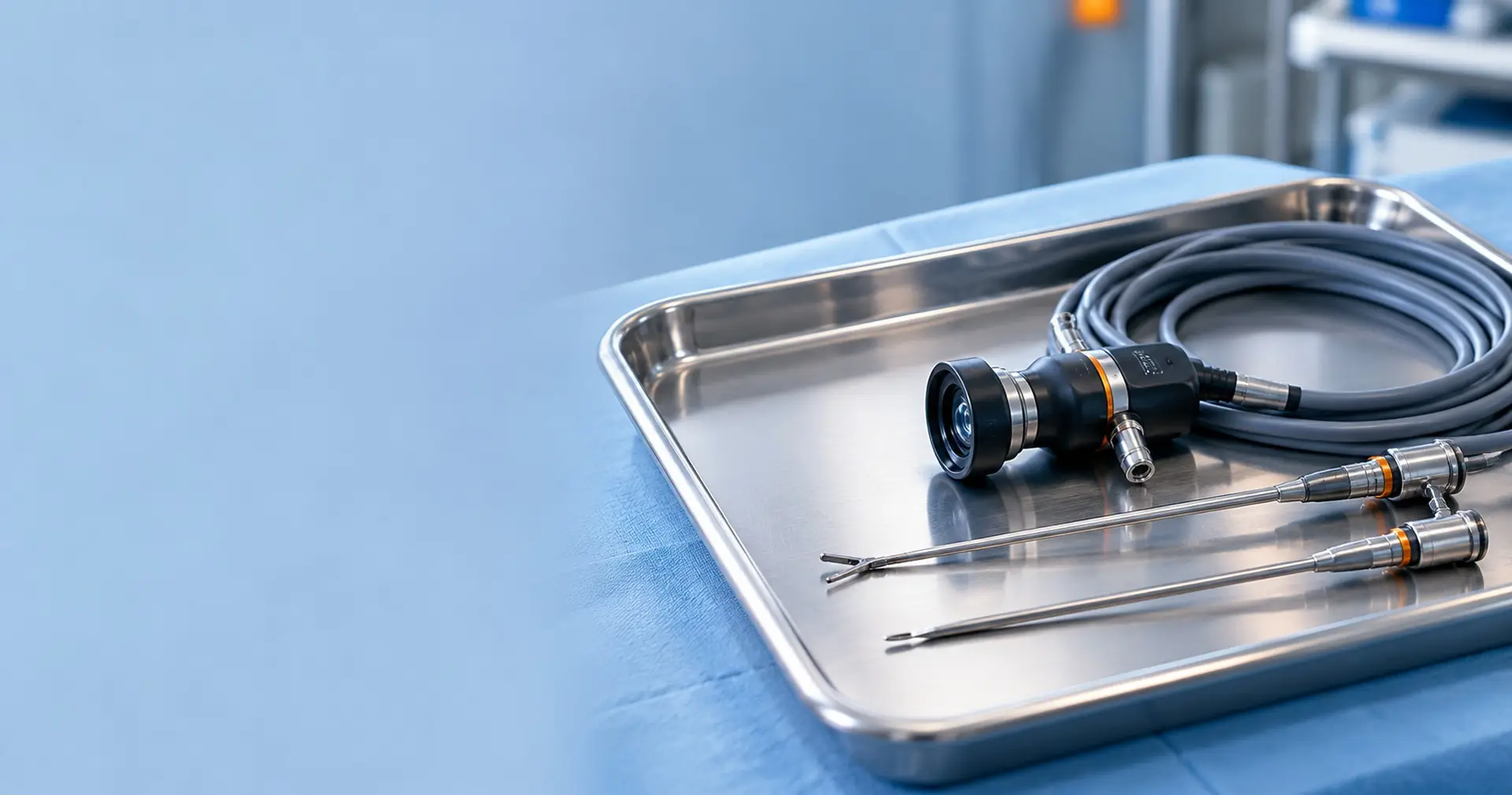
Knee Arthroscopy Surgery in Bangalore
Minimally Invasive Surgery. Preserving Joint Health. Restoring Movement.
What Is Knee Arthroscopy?
Small Incisions. Advanced Surgical Precision.
Knee arthroscopy is a minimally invasive surgical procedure that allows the surgeon to examine and treat injuries inside the knee joint using a small camera called an arthroscope.
Through small incisions, specialised instruments are used to repair damaged ligaments, preserve meniscal tissue and treat selected cartilage injuries.
Compared with traditional open surgery for suitable conditions, arthroscopy generally involves less soft-tissue disruption and smaller surgical scars.
What Conditions Can Be Treated with Knee Arthroscopy?
Advanced Solutions for Knee Injuries and Joint Preservation.
Knee arthroscopy is used to treat several ligament, meniscus and cartilage conditions.
ACL Injuries & Reconstruction
Arthroscopic reconstruction of a torn anterior cruciate ligament to restore knee stability, including advanced All-Inside ACL Reconstruction techniques.
PCL Injuries & Reconstruction
Arthroscopic reconstruction of selected posterior cruciate ligament injuries causing significant knee instability.
Meniscus Tears & Repair
Repair of suitable meniscus tears using advanced arthroscopic techniques, with an emphasis on preserving healthy meniscal tissue.
Knee Cartilage Injuries
Arthroscopic assessment and selected cartilage treatment procedures, including chondroplasty and microfracture when appropriate.
Other Selected Conditions
Removal of symptomatic loose bodies, treatment of certain synovial disorders and management of selected complex ligament injuries.
When Is Knee Arthroscopy Recommended?
The Right Procedure for the Right Knee Condition.
Knee arthroscopy may be considered for patients experiencing:
- Persistent knee instability following ligament injuries
- Displaced meniscus tears causing true mechanical locking
- Selected traumatic meniscus tears suitable for repair
- Symptomatic focal cartilage injuries
- Certain loose bodies or other treatable intra-articular conditions
Not every knee injury requires surgery. The decision depends on the underlying diagnosis, symptoms, clinical examination and response to appropriate non-surgical treatment.
Can Knee Injuries Be Treated Without Arthroscopy?
Not Every Knee Problem Needs an Operation.
Many knee conditions improve with physiotherapy, muscle strengthening, activity modification, appropriate medications and structured rehabilitation.
Stable ligament injuries, selected meniscus tears and minor cartilage injuries may not require surgery.
Arthroscopy is considered when a clearly identified problem is likely to benefit from surgical intervention.
How Is Knee Arthroscopy Performed?
A Detailed View Inside the Knee Through Small Incisions.
During knee arthroscopy, the surgeon introduces a small camera through a tiny incision to obtain a magnified view of the joint.
Specialised instruments are inserted through additional small incisions to perform the necessary repair, reconstruction or other treatment.
The procedure may be performed under regional or general anaesthesia, depending on the surgery and patient's medical requirements.
What Are the Benefits of Arthroscopic Knee Surgery?
Minimally Invasive Treatment. Focused on Joint Preservation.
For appropriately selected patients, potential benefits include:
Smaller Incisions
Reduced disruption of surrounding soft tissues compared with open surgery.
Detailed Joint Visualisation
Magnified assessment of internal knee structures.
Targeted Treatment
Precise treatment of damaged ligaments, menisci and selected cartilage injuries.
Joint Preservation
Opportunity to repair suitable injuries while retaining healthy structures.
Procedure-Dependent Recovery
Some arthroscopic procedures allow relatively early mobilisation and rehabilitation.
Outcomes depend on the underlying injury, surgical procedure and individual patient factors.
Can Knee Arthroscopy Treat Advanced Arthritis?
Arthroscopy Repairs Selected Injuries. It Does Not Reverse Advanced Arthritis.
Knee arthroscopy is not an effective routine treatment for advanced osteoarthritis or widespread cartilage loss.
Arthroscopic washing or debridement does not reliably restore damaged cartilage or provide lasting relief from established degenerative knee arthritis.
Patients with advanced osteoarthritis may benefit more from appropriate non-surgical management or, when indicated, knee replacement surgery.
What Are the Risks of Knee Arthroscopy?
Minimally Invasive Does Not Mean Risk-Free.
Although knee arthroscopy is generally considered a safe procedure, potential complications include infection, blood clots, swelling, stiffness, bleeding and injury to surrounding structures.
Ligament reconstruction and meniscus repair also carry procedure-specific risks, including failure of healing or recurrent symptoms.
The expected benefits and potential risks should be discussed before surgery.
Recovery & Rehabilitation After Knee Arthroscopy
Recovery Depends on What Is Repaired, Not Just the Size of the Incision.
Recovery varies according to the procedure performed.
Simple arthroscopic procedures may allow walking and daily activities relatively early, while ligament reconstruction, meniscus repair and cartilage restoration require more structured rehabilitation.
Physiotherapy focuses on restoring knee movement, muscle strength, balance and functional stability.
Return to sports should be based on healing and functional recovery rather than time alone.
Why Choose Dr. Dharmapal G.K. & Sun Hospitals for Knee Arthroscopy?
Extensive Arthroscopic Experience. Advanced Surgical Techniques. Dedicated Rehabilitation.
With over two decades of orthopaedic surgical experience, Dr. Dharmapal G.K. focuses on arthroscopic knee surgery, sports injury management and ligament reconstruction.
Sun Hospitals' institutional surgical experience includes 3,000+ Arthroscopic ACL Reconstructions.
Our specialised infrastructure includes:
- 50-Bed Dedicated Orthopaedic Hospital in North Bengaluru
- Three Modern Operation Theatres equipped for advanced orthopaedic procedures
- Advanced Arthroscopic Techniques, including All-Inside ACL Reconstruction and specialised meniscus repair
- Experienced Orthopaedic Team comprising five orthopaedic surgeons supported by trained nursing and paramedical professionals
- Comprehensive Physiotherapy & Rehabilitation, including home physiotherapy services
Our treatment philosophy focuses on accurate diagnosis, appropriate surgical intervention, preservation of healthy knee structures and individualised rehabilitation.
Our Philosophy: Preserve Joint Health. Restore Stability. Rebuild Confidence in Movement.
Our team will usually see you within 24–48 hours of your request.
Book an appointment Call the front desk