Meniscus Tear Treatment & Arthroscopic Repair in Bangalore
Preserve the Meniscus. Protect the Knee. Restore Movement.
SAVE THE MENISCUS - PREVENT KNEE ARTHRITIS
What Is a Meniscus Tear?
The Knee's Natural Shock Absorber. Essential for Joint Protection.
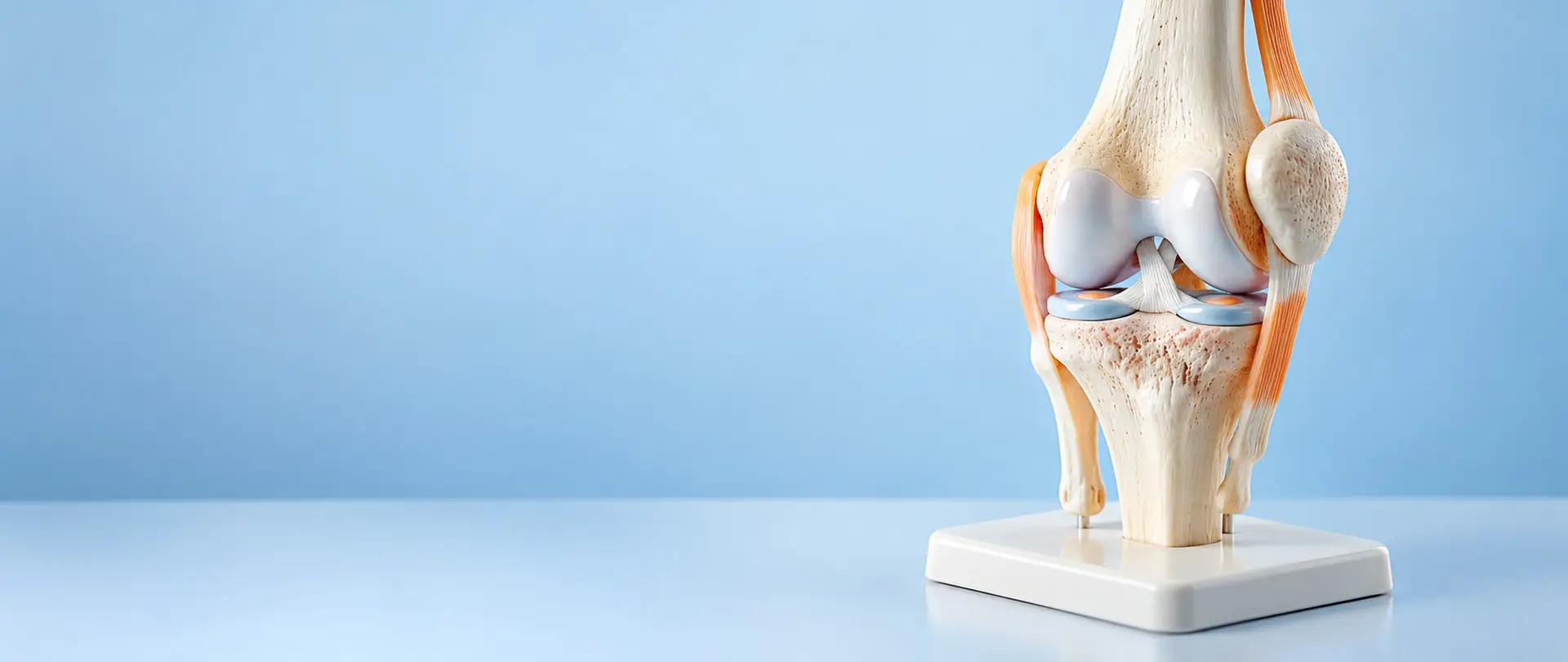
The menisci are two C-shaped fibrocartilage structures located between the thighbone and shinbone. They act as shock absorbers, distribute body weight and contribute to knee stability.
Meniscus tears commonly occur during twisting injuries, sports activities, deep squatting or as a result of age-related degeneration.
What Are the Symptoms of a Meniscus Tear?
Knee Pain. Swelling. Clicking or Locking.
Common symptoms include pain along the inner or outer side of the knee, swelling, clicking, catching and difficulty squatting or twisting.
Some patients experience true knee locking, where a displaced meniscus fragment physically prevents the knee from straightening completely.
How Is a Meniscus Tear Diagnosed?
Accurate Diagnosis. Understanding the Tear Pattern.
Meniscus injuries are diagnosed through clinical examination, assessment of joint-line tenderness and specialised knee tests.
MRI helps identify the location, size and pattern of the tear, along with associated cartilage or ligament injuries.
Understanding the tear pattern is essential in determining whether the meniscus can be preserved through repair.
Can a Torn Meniscus Heal Naturally Without Surgery?
Some Tears Can Heal. Others Have Limited Healing Potential.
The healing ability of a meniscus depends largely on its blood supply.
Red-Red Zone
The outer, well-vascularised region with the greatest healing potential.
Red-White Zone
An intermediate region with variable healing potential.
White-White Zone
The inner region with limited blood supply and poor natural healing potential.
Small, stable tears in well-vascularised areas may heal without surgery.
Important: PRP injections have not been proven to reliably heal meniscus tears. Although some studies suggest symptom improvement, they cannot be considered a dependable substitute for repairing an unstable or displaced tear.
Does Every Meniscus Tear Require Surgery?
Not Every Meniscus Tear Needs an Operation.
Small, stable tears and many degenerative meniscus tears can be managed with physiotherapy, activity modification, strengthening exercises and appropriate pain management.
Surgery may be considered for displaced tears, true knee locking, repairable traumatic tears or persistent symptoms despite appropriate rehabilitation.
Treatment depends on the tear pattern, patient age, activity level, associated injuries and condition of the joint cartilage.
What Happens if a Meniscus Tear Is Left Untreated?
Persistent Mechanical Symptoms May Compromise Joint Health.
Some meniscus tears remain stable and cause minimal symptoms, particularly in patients with lower activity demands.
However, unstable or displaced tears may cause recurrent pain, catching, locking and progressive damage to the meniscal tissue.
Loss of functional meniscal tissue can increase pressure on the joint cartilage and contribute to degenerative changes over time - KNEE OSTEOARTHRITIS
When Is Arthroscopic Meniscus Surgery Recommended?
Treat the Tear. Preserve Healthy Meniscal Tissue.
Arthroscopic surgery may be recommended for:
- Displaced bucket-handle tears causing knee locking
- Repairable traumatic meniscus tears
- Selected meniscal root or radial tears
- Meniscus injuries associated with ACL reconstruction
- Persistent symptomatic tears despite appropriate non-surgical treatment
A truly locked knee caused by a displaced meniscus tear requires prompt orthopaedic assessment.
Whenever feasible, the preferred approach is to repair and preserve the meniscus rather than remove healthy meniscal tissue.
What Are the Surgical Options for Meniscus Tears?
Meniscus Preservation Is Our Priority.
The surgical approach depends on the tear pattern, location, tissue quality and healing potential.
Arthroscopic Meniscus Repair
The torn meniscal tissue is repaired using specialised sutures and fixation devices. This approach aims to preserve the natural shock absorber and maintain long-term knee function.
Arthroscopic Partial Meniscectomy
When a tear cannot be repaired, the damaged or unstable portion may be selectively removed while preserving as much healthy meniscus as possible.
Meniscal Root Repair
A meniscal root tear disrupts the attachment of the meniscus to the bone, compromising its ability to distribute load.
Selected root tears can be repaired using specialised sutures and fixation techniques to restore the meniscal attachment.
Complex Meniscus Repair
Certain radial, bucket-handle and meniscus tears associated with ACL injuries may require advanced repair techniques.
The decision to repair depends on tear characteristics, tissue quality and the overall condition of the knee.
What Are the Advanced Techniques for Arthroscopic Meniscus Repair?
Modern Arthroscopic Techniques. Focused on Tissue Preservation.
Different repair techniques are available depending on the location and pattern of the meniscus tear.
All-Inside Meniscus Repair
A minimally invasive arthroscopic technique using specialised suture-based fixation devices to repair the meniscus from within the knee joint.
It can avoid additional incisions required by some conventional repair techniques.
Inside-Out Meniscus Repair
Sutures are passed from inside the joint through the meniscus and secured through a small additional incision.
This is an established technique for selected meniscus tears, particularly involving the body and posterior regions.
Outside-In Meniscus Repair
Sutures are introduced from outside the joint and passed through the meniscus under arthroscopic guidance.
This technique is particularly useful for selected anterior meniscal tears.
Meniscal Root and Radial Tear Repair
Specialised suturing and fixation methods are used to reconstruct selected root and radial tears, aiming to restore the meniscus's load-distributing function.
The most appropriate technique depends on the tear pattern, location and quality of the remaining meniscal tissue.
Recovery & Rehabilitation After Meniscus Surgery
Protecting the Repair. Restoring Strength. Returning to Activity.
Recovery depends on whether the meniscus is repaired or partially removed.
After Partial Meniscectomy:
Patients can often begin walking early, with progressive exercises to restore movement and muscle strength. Return to sports may take approximately 4–12 weeks, depending on recovery.
After Meniscus Repair:
The repaired tissue requires time to heal. Temporary restrictions on weight-bearing, knee bending and strenuous activities may be necessary.
Return to demanding sports commonly takes 4–9 months, depending on the tear pattern, repair technique and rehabilitation progress.
Structured physiotherapy plays an essential role in protecting the repair and restoring knee function.
Why Choose Dr. Dharmapal G.K. & Sun Hospitals for Meniscus Surgery?
Extensive Arthroscopic Experience. Advanced Repair Techniques. Dedicated Rehabilitation.
With over two decades of orthopaedic surgical experience, Dr. Dharmapal G.K. focuses on arthroscopic knee surgery, sports injury management and meniscus-preserving surgical techniques.
At Sun Hospitals, our approach brings together:
Meniscus Preservation
Repairing viable meniscal tissue wherever clinically appropriate.
Advanced Arthroscopic Techniques
All-inside and other specialised repair techniques selected according to the injury.
Comprehensive Knee Injury Management
Assessment and treatment of associated ACL, ligament and cartilage injuries.
Dedicated Rehabilitation
In-house physiotherapy services, including home physiotherapy support where appropriate.
Specialised Orthopaedic Infrastructure
A dedicated 50-bed orthopaedic hospital with three modern operation theatres and multidisciplinary support.
Our philosophy is built on accurate diagnosis, ethical treatment selection, preservation of healthy joint structures and individualised rehabilitation.
Our Philosophy: Preserve the Meniscus. Protect Joint Health. Restore Confident Movement.
Our team will usually see you within 24–48 hours of your request.
Book an appointment Get a second opinion