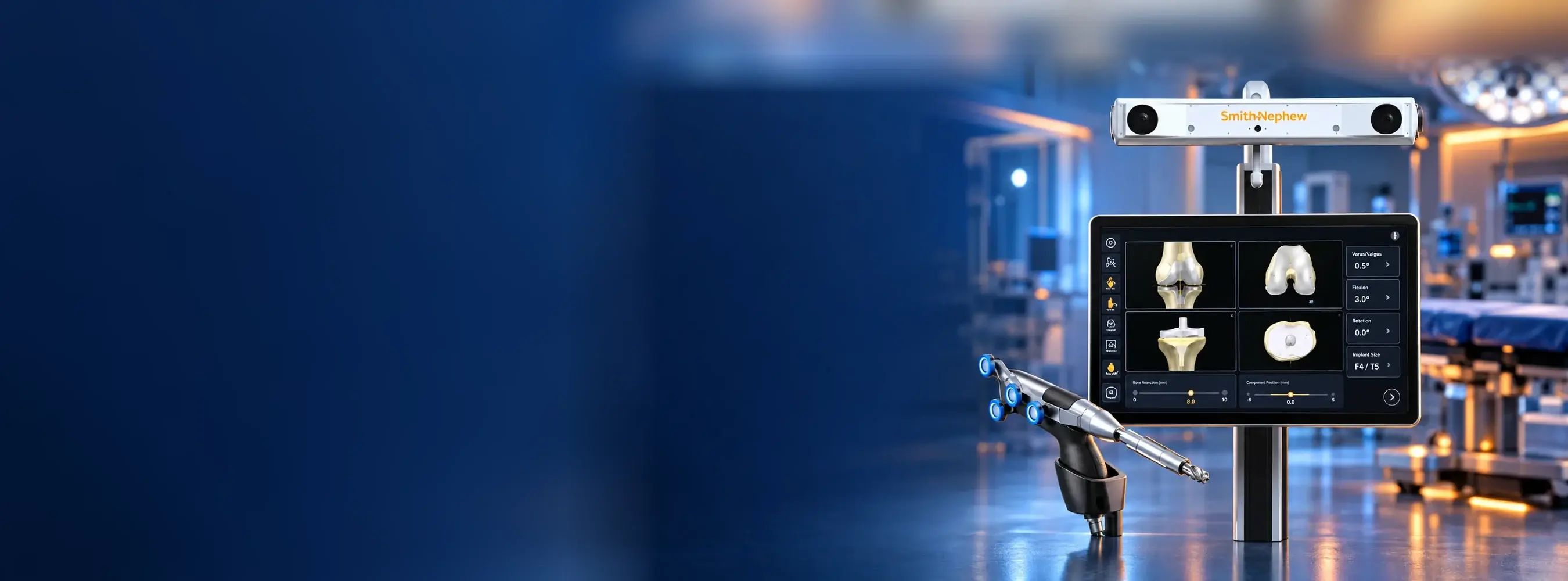
CORI® Robotic Technology & OXINIUM Knee Implants
Precision in Surgery. Innovation in Implant Technology.
At Sun Hospitals – Robotic Joint Replacement Centre, Bengaluru, we combine the advanced CORI® Robotic Surgical System with a choice of modern knee implants, including OXINIUM Oxidised Zirconium technology.
Our approach brings together personalised surgical planning, precise implant positioning and carefully selected implant materials, guided by the experience and clinical judgement of Dr. Dharmapal G.K.
What Is CORI® Robotic Knee Replacement Technology?
Advanced Handheld Robotics. Personalised Surgical Precision.
The CORI® Surgical System by Smith+Nephew, USA, is an advanced handheld robotic platform designed to assist surgeons during total and partial knee replacement procedures.
Using image-free 3D mapping, the system creates a digital model of the patient's knee during surgery, allowing the surgeon to assess joint anatomy, plan implant positioning and evaluate ligament balance in real time.
Unlike systems requiring a preoperative CT scan for robotic planning, CORI® can create its surgical model directly in the operating theatre.
The robot does not operate independently. The surgeon remains in control throughout the procedure.
How Does CORI® Robotic Technology Work?
A Surgical Plan Designed Around Your Knee.
CORI® assists the surgeon through four key stages:
3D Knee Mapping
Creates a digital model of the patient's individual knee anatomy.
Personalised Surgical Planning
Helps determine implant size, alignment and positioning based on joint anatomy and ligament balance.
Precision-Guided Bone Preparation
A surgeon-controlled robotic handpiece assists with accurate bone preparation according to the surgical plan.
Real-Time Assessment
Digital measurements support adjustments to joint alignment and balance during surgery.
This enables a more individualised approach to knee replacement rather than relying solely on conventional alignment instruments.
What Are the Potential Benefits of CORI® Robotic Knee Replacement?
Greater Surgical Precision. Personalised to Your Anatomy.
CORI® robotic assistance offers several technical advantages:
Patient-Specific Planning
Surgical decisions guided by individual knee anatomy.
Accurate Implant Positioning
Digital assistance for bone preparation and implant alignment.
Ligament Balance Assessment
Real-time information to help assess knee stability.
Surgeon-Controlled Precision
Advanced technology supporting surgical expertise.
Robotic assistance can improve certain measures of surgical accuracy.
What Are OXINIUM Knee Implants?
Advanced Implant Material. Engineered for Wear Resistance.
OXINIUM (Oxidised Zirconium) is an advanced implant material developed by Smith+Nephew for joint replacement surgery.
OXINIUM technology combines the strength of a zirconium-based metal alloy with a hard, ceramic-like surface designed to resist wear.
Unlike a conventional surface coating, the outer layer is created by transforming the surface of the metal itself through a specialised oxidation process.
In knee replacement, this technology can be used in the femoral component, which articulates against a medical-grade polyethylene bearing.
What Makes OXINIUM Different from Conventional Knee Implants?
Ceramic-Like Wear Resistance. Metal-Based Strength.
Compared with conventional cobalt-chromium knee implant materials, OXINIUM offers several distinctive properties:
Wear-Resistant Surface
A hard, ceramic-like surface designed to minimise wear at the articulating interface.
Metal Core Strength
Combines surface hardness with the mechanical properties of a metal alloy.
Corrosion Resistance
Engineered to resist surface corrosion.
Low Cobalt, Nickel and Chromium Content
A potential material alternative for selected patients with metal sensitivity, following appropriate clinical evaluation.
These properties make OXINIUM an implant material option for patients undergoing knee replacement surgery.
How Durable Are OXINIUM Knee Implants?
Engineered for Durability. Selected for the Individual Patient.
OXINIUM implants are designed with wear-resistant material properties intended to support long-term joint replacement performance.
Laboratory studies have demonstrated favourable wear characteristics.
The longevity of any knee replacement depends on several factors, including implant design, surgical positioning, bone quality, body weight, activity level and overall patient health.
Choosing the appropriate implant is as important as choosing the surgical technique.
CORI® Robotics & OXINIUM Implants at Sun Hospitals
Technology Supports Precision. Experience Guides Every Decision.
At Sun Hospitals, Dr. Dharmapal G.K. integrates advanced robotic-assisted surgical techniques with individualised implant selection and evidence-based orthopaedic care.
CORI® technology supports surgical planning and precise bone preparation, while OXINIUM offers an advanced implant material option with distinctive wear-resistant properties.
The choice of robotic assistance and implant material is based on each patient's anatomy, medical condition, functional requirements and clinical suitability.
Our Philosophy: The Right Technology. The Right Implant. The Right Treatment for Every Patient.
Our team will usually see you within 24–48 hours of your request.
Free robotic enquiry Call the front desk