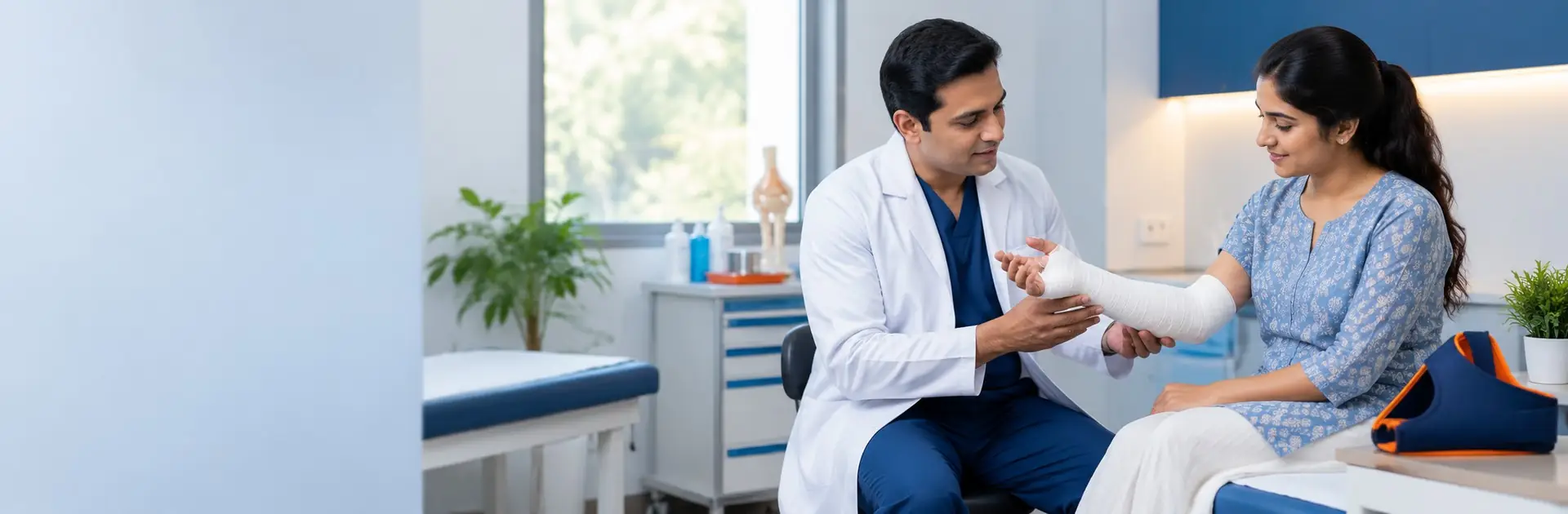
Understanding fractures
A fracture can be painful and disruptive, but with the right care, recovery is within reach. We look after fractures from diagnosis through to rehabilitation, with care planned around you, so your bone heals well and you can get back to your normal activities. Our orthopaedic team will guide you through every step.
A fracture is a break in a bone. It can be caused by an injury, by overuse, or by an underlying condition such as osteoporosis. Fractures vary in type and severity:
- Simple (closed): the bone breaks but doesn't come through the skin.
- Compound (open): the broken bone pierces the skin, which raises the risk of infection.
- Stress fracture: small cracks in the bone, often from repeated stress or overuse.
- Comminuted: the bone shatters into several pieces.
- Greenstick: an incomplete break where the bone bends and cracks — common in children.
Diagnosis and treatment
Treatment starts with an accurate diagnosis. Imaging such as X-rays, CT scans and MRI shows the type and extent of your fracture, and we build your treatment plan on what it finds. Depending on the break, your plan may include:
- Non-surgical treatment: casts, splints and braces hold the fracture still so the bone can heal naturally.
- Surgical treatment: internal fixation with metal plates, screws or rods, or external fixation with a stabilising frame outside the body, to line up and steady the bone.
- Pain management: medicines and nerve blocks to keep you comfortable while you heal.
Your treatment plan is based on your diagnosis — tailored to the fracture you have and to your needs.
Recovery and follow-up
Physiotherapy and rehabilitation help restore strength, flexibility and function to the injured area, so your recovery goes smoothly.
Regular follow-up appointments let us check how your bone is healing and adjust your treatment plan if needed.
How we care for you
Our orthopaedic surgeons have extensive experience in fracture management. They use advanced imaging and surgical technology for a precise diagnosis and effective treatment.
We support you at every stage, from emergency care to rehabilitation after surgery. Along the way, we explain what's happening, keep you comfortable, and make sure your care is personal to you.
Preventing another fracture
As well as treating fractures, we help prevent them — particularly if you're at risk of osteoporosis or have had fractures before. Preventive care includes:
- Bone health assessments: checks of your bone density and risk factors.
- Nutrition advice: guidance on a bone-healthy diet rich in calcium and vitamin D.
- Exercise programmes: strengthening exercises to improve bone health and help prevent falls.
- Lifestyle changes: advice that lowers your fracture risk, such as stopping smoking and cutting down on alcohol.
Next steps
If you or someone close to you has had a fracture, or you'd like to know more about preventing one, book a consultation with our team. We're here to help you regain your strength and mobility.
This article explains our general approach — it isn't personal medical advice. Your surgeon's instructions for your case always come first.